Arm and hand
Your arm and hand reach from your shoulder to your fingertips. In anatomy they make up the upper limb, which has three regions. The arm runs from the shoulder to the elbow, the forearm from the elbow to the wrist, and the hand lies beyond the wrist. The shoulder joins the whole limb to the rest of your body. The lower limb, your leg and foot, is divided into three regions in the same way: the thigh, the leg and the foot. Here, the leg means only the part between the knee and the ankle.
Each upper limb has 30 bones. The humerus is the one bone of the arm, and the radius and ulna are the two bones of the forearm. The wrist has eight carpal bones, the palm five metacarpals, and the fingers and thumb 14 phalanges between them. At the shoulder, the collarbone and the shoulder blade hold the limb to the trunk.
Muscles around the shoulder move the arm in every direction. Lower down, the muscles of the arm and forearm bend and straighten the elbow, wrist and fingers. The hand has muscles of its own too, which let the fingers make precise movements, as in writing or typing. Most of the limb's nerves come from the brachial plexus, a network of nerves that runs from the side of your neck into your armpit. It forms from the lower four nerves of the neck and the first nerve of the chest.
Topics
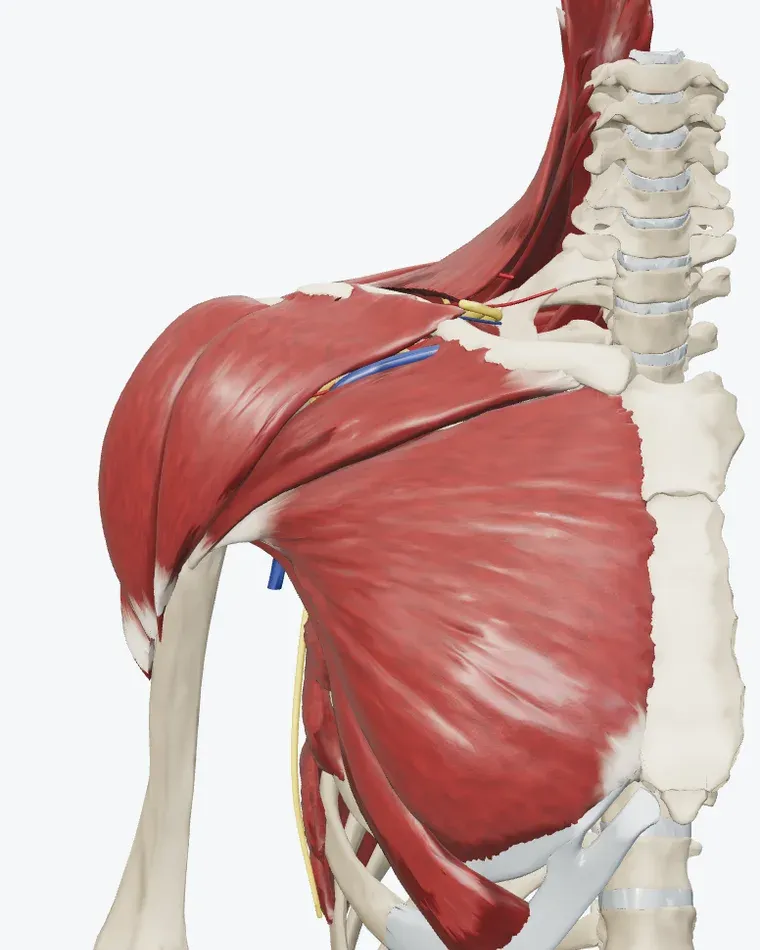 Shoulder anatomyThe bones, joints, muscles, nerves and vessels where the arm joins the body
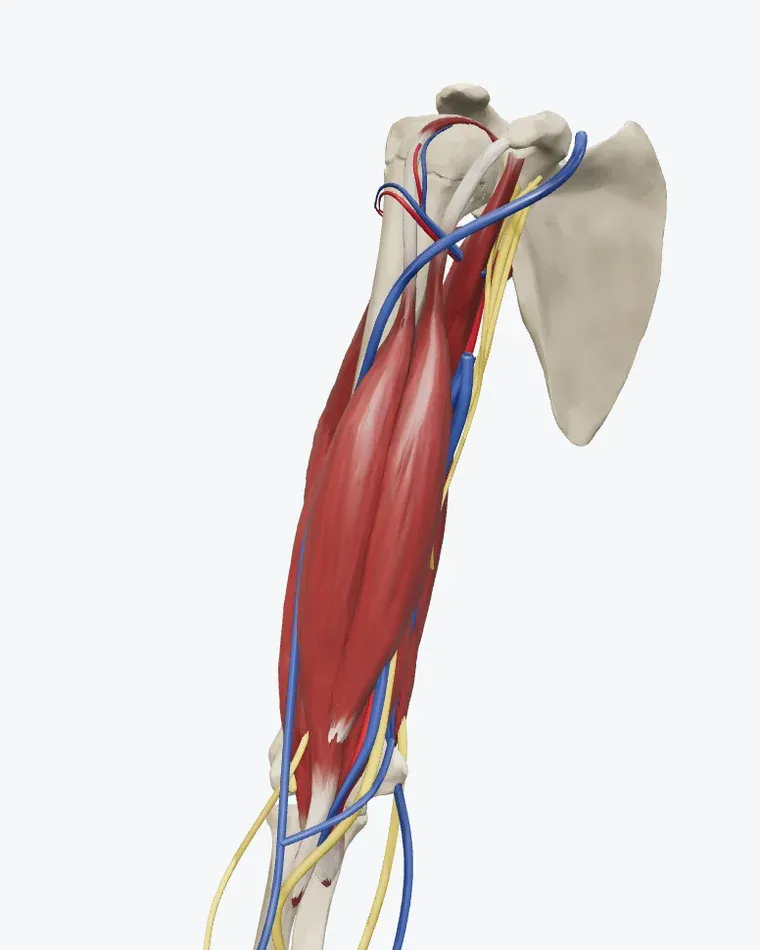 Arm anatomyThe humerus and the muscles, nerves and vessels around it, from the shoulder to the elbow
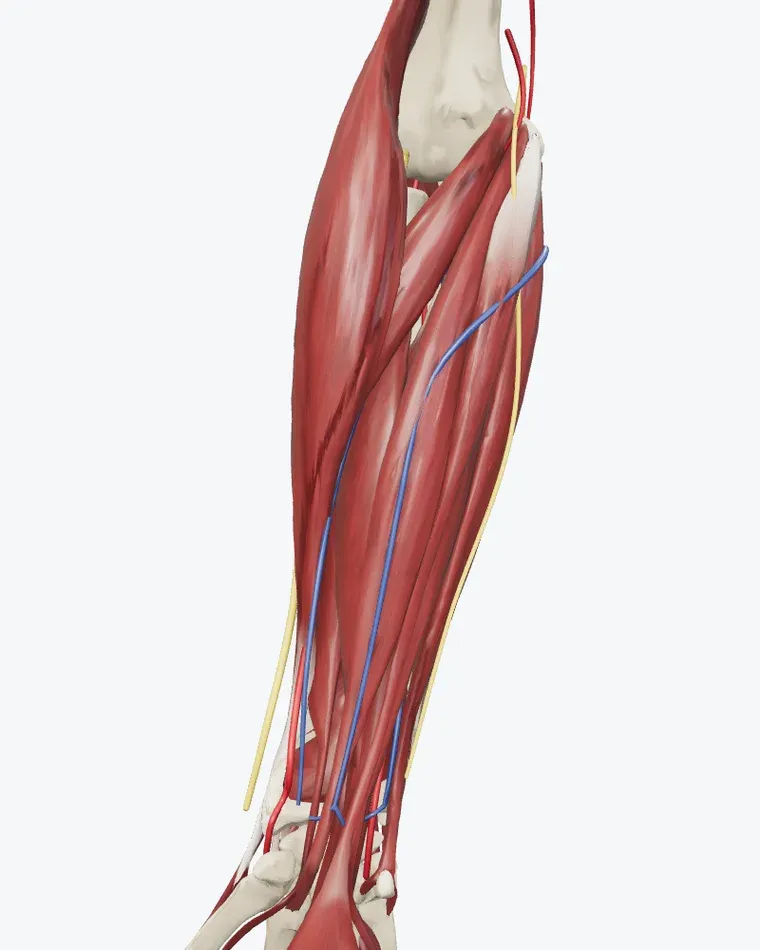 Forearm anatomyThe radius and ulna and the muscles, nerves and vessels around them, from the elbow to the wrist
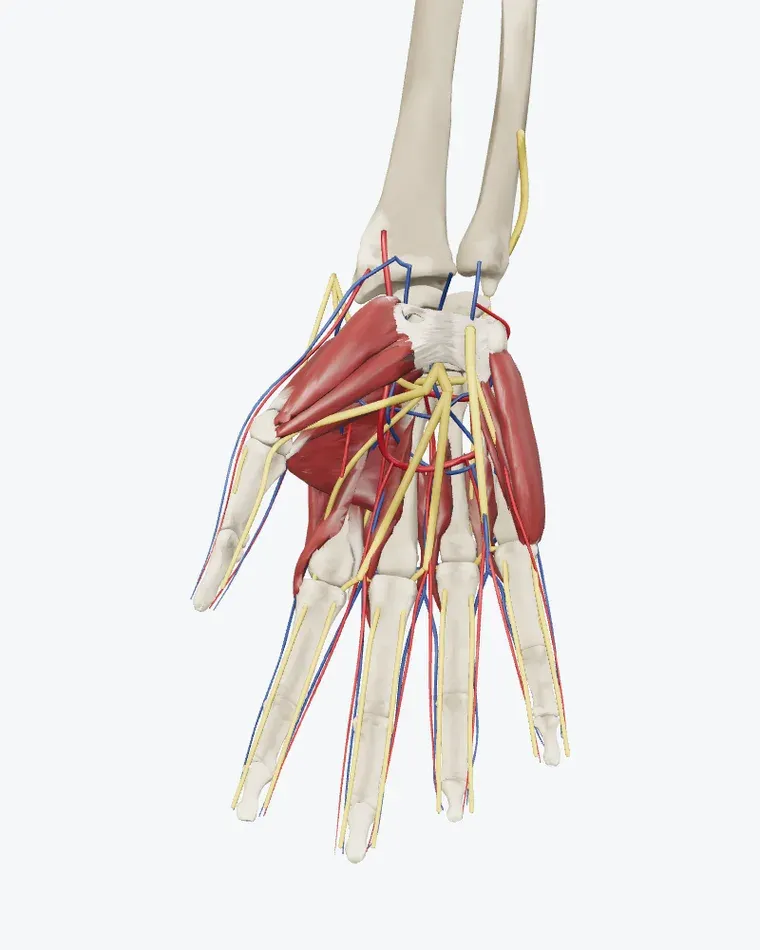 Hand anatomyThe wrist and hand, from the eight carpal bones to the fingertips, with the muscles, nerves and vessels between them
Every fact checked against the sources below on
Sources
- Gray's Anatomy of the Human Body, 20th edition (1918)
- Anatomy and Physiology (OpenStax, 2013)
- SEER Training Modules (National Cancer Institute)
- MedlinePlus (National Library of Medicine)
- NCI Thesaurus (National Cancer Institute)
- Terminologia Anatomica, 2nd edition (FIPAT, 2019)
- upper limb (TA2 138)
- shoulder (TA2 139)
- arm (TA2 144)
- forearm (TA2 146)
- hand (TA2 148)
- Foundational Model of Anatomy (University of Washington)