
What part of the brain controls personality and behaviour?
Your prefrontal cortex, the front part of each frontal lobe behind your forehead, helps you direct your behaviour towards your goals. Its work is central to your personality, because it is largely responsible for what you intend to do and how you carry out your plans. Your limbic system, deeper in your brain, is involved in emotion, memory and behaviour.
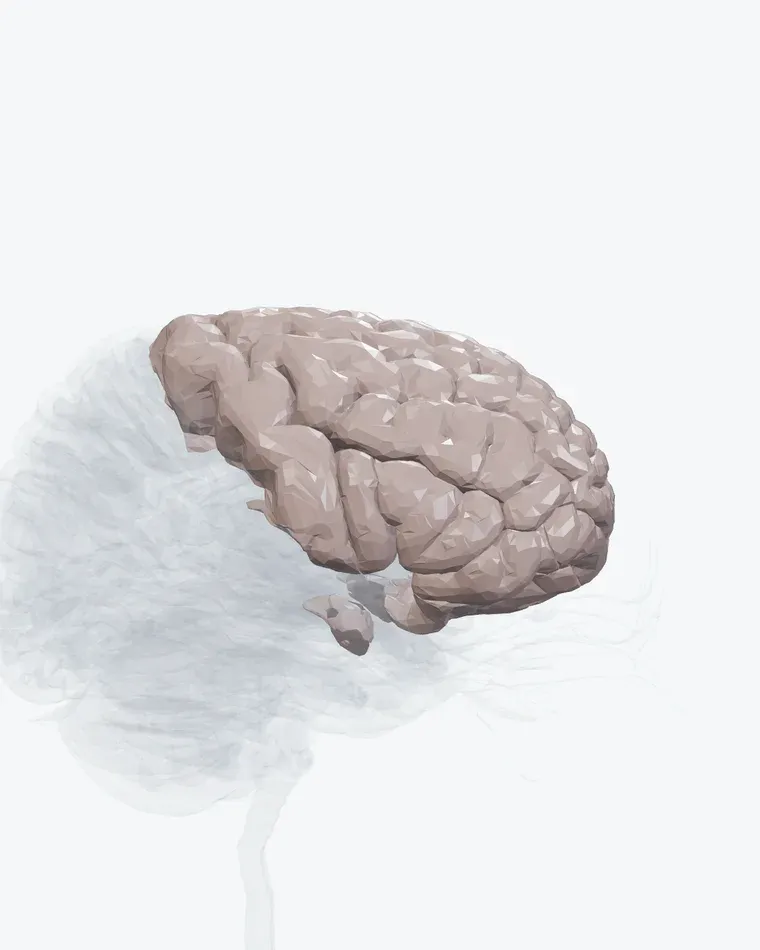
The parts involved
Choose a part to light it up.
- Prefrontal cortexHandles planning, decisions, judgement and working memory, and holds back distracting thoughts and actions so you can focus on a goal. More about the prefrontal cortex
- Frontal lobeTakes part in reasoning, impulse control, emotion and language, as well as movement. Its front part is the prefrontal cortex. More about the frontal lobe
- AmygdalaRegulates emotions such as fear and aggression, and can be damped down by your prefrontal cortex, which lets you hold back negative emotions. More about the amygdala
What does the prefrontal cortex do?
Your prefrontal cortex takes up the front of each frontal lobe, ahead of the areas that control movement. The prefrontal cortex is important for executive functions, the kinds of thinking that steer your behaviour towards a goal. It keeps your attention on that goal by holding back distracting thoughts and actions. Psychology (OpenStax, 2014) ties the prefrontal cortex to judgement, reasoning and impulse control, and says it is responsible for higher-level thinking.
In one chapter, Anatomy and Physiology (OpenStax, 2013) calls the prefrontal cortex's work central to personality. In another, it says more cautiously that, to an extent, the prefrontal cortex may be related to personality.
The Foundational Model of Anatomy, a reference list of the body's parts, records nerve fibres running both ways between your prefrontal cortex and your amygdala. The amygdala is a part of your limbic system involved in emotions such as fear. The prefrontal cortex can damp down activity in the amygdala, and this lets you hold back negative emotions.
What happened to Phineas Gage?
In 1848, Phineas Gage, a railway foreman in Vermont, and his crew were using an iron rod to pack explosives into a hole to blast away rock. The rod struck a spark and shot out of the hole, through his face and skull. It damaged his prefrontal cortex.
He survived, but by second-hand accounts his personality changed. Before the accident he had been hard-working and friendly. Afterwards he was described as irritable, moody and lazy, and friends said he was no longer himself. Psychology says these changes fit a loss of impulse control, one of the frontal lobe's jobs. The rod probably also damaged pathways between his frontal lobe and his limbic system, and Gage had difficulty controlling his emotional impulses.
Both OpenStax textbooks warn that the accounts may have been exaggerated. Anatomy and Physiology says some of his behaviour was likely due to alcohol, which he took for the pain, and that he later worked as a stagecoach driver.
Why do teenagers take more risks?
Your frontal lobes grow fast between the ages of 3 and 6, and by school age children are able to control their attention and behaviour. The frontal lobes are still developing in the teenage years. Psychology (OpenStax, 2014) suggests this may be why teenagers take more risks and have more emotional outbursts. The frontal lobes handle judgement, impulse control and planning, and they go on maturing into early adulthood.
Which part of the brain helps you make decisions?
Planning and making decisions are the prefrontal cortex's work. Before a movement is planned, the prefrontal cortex judges whether it should be made at all, as when your alarm goes off and you decide whether to hit the snooze button. To act on a decision, the prefrontal cortex sends signals to the premotor cortex and the supplementary motor area, which help plan and coordinate the movement. Another area of the frontal lobe, the orbitofrontal cortex, is involved in learning and decision-making.
An examiner can test these abilities in the mental status exam, part of a neurological exam. To check the frontal lobe's judgement and reasoning, the examiner asks questions about solving problems, such as what you would do if you saw a house on fire.
Every fact on this page is checked against the sources below. Last checked:
Sources
- Gray's Anatomy of the Human Body, 20th edition (1918)
- Anatomy and Physiology (OpenStax, 2013)
- Psychology (OpenStax, 2014)
- SEER Training Modules (National Cancer Institute)
- Foundational Model of Anatomy (University of Washington)