
What part of the brain controls emotions?
Your limbic system, a group of structures deep in your brain, is involved in processing emotion and memory. Its amygdala, in each temporal lobe, helps you feel emotions such as fear and ties emotional meaning to your memories. In an emotional reaction, your hypothalamus helps switch on the fight-or-flight response, and your frontal lobe has a part in emotion too.
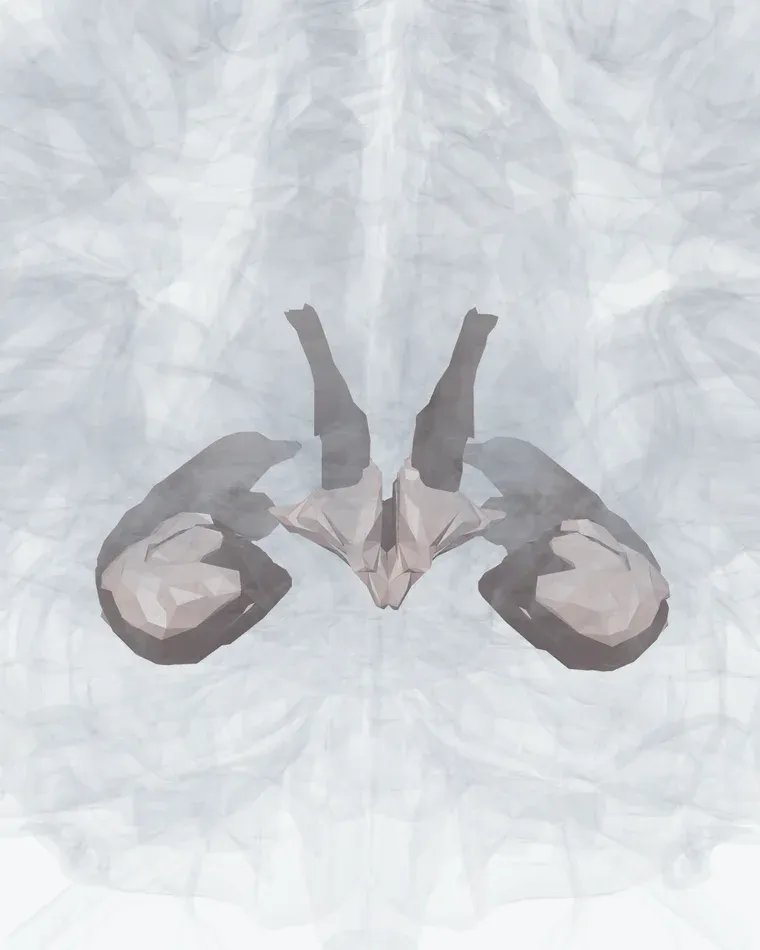
The parts involved
Choose a part to light it up.
- AmygdalaRegulates emotions such as fear and aggression, and signals your hypothalamus when you are scared. More about the amygdala
- HypothalamusHelps switch on the fight-or-flight response in an emotional reaction, and sets off the release of stress hormones when signals arrive from your amygdala. More about the hypothalamus
- HippocampusLinks your emotional experience with your thinking, and takes part with your amygdala in forming long-term memories and in emotional responses. More about the hippocampus
What does the amygdala do?
Your amygdala is an egg-shaped group of nuclei, clusters of nerve cells, on the inner side of each temporal lobe. This lobe, at the side of your head, is linked with emotion and memory as well as hearing. The amygdala is important for judging the emotional meaning of what you sense and for feeling emotions. Its main job is to regulate emotions such as fear and aggression. The amygdala also helps process emotional information and pass it on to areas of the cerebral cortex, the brain's outer layer.
One part of the amygdala, the basolateral complex, is critical for attaching emotional value to what you learn and remember. Changes in the structure and working of the amygdala have been found in teenagers with mood or anxiety disorders.
What happens in your brain when you're scared?
Research by Joseph LeDoux showed that the amygdala has the main role in fear. Something you fear is perceived in your thalamus, the brain's relay for signals from the senses. From there, signals take one of two paths to the amygdala. The quick path goes straight there. The other passes through the cortex on the way, so your brain can take in more detail.
When you are anxious or scared, the amygdala sends signals to your hypothalamus, a small region below the thalamus. The hypothalamus then sets off the fight-or-flight response and the release of stress hormones, such as cortisol. Your heart races and your breathing speeds up. These changes in your body don't seem to be needed to feel an emotion, but they do seem to make the feeling stronger.
What is the limbic system?
Your limbic system is a collection of brain structures involved in emotion, memory and behaviour. Psychology (OpenStax, 2014) names three of its most important parts: the hippocampus, the amygdala and the hypothalamus. The hippocampus brings your emotional experience together with your thinking. The hippocampus and amygdala, with the cortex beside them, take part in forming long-term memories and in emotional responses.
Why can a smell bring back a feeling?
Signals of smell travel straight to your limbic system. Psychology (OpenStax, 2014) says this is why a smell can stir emotions in ways your other senses can't. From your olfactory bulb, under the front of your brain, some smell signals go to parts of the limbic system and the hypothalamus. There, smells become linked with long-term memories and emotions. That is how the smell of a food from the place where you were born can bring back an emotional memory. Smell is also the one sense whose signals reach the cortex without first passing through the thalamus.
Does the front of your brain control emotions?
Your frontal lobe, behind your forehead, is involved in emotion as well as reasoning, movement and language. The front part of the frontal lobe, the prefrontal cortex, is important in regulating and controlling emotions. The prefrontal cortex can damp down activity in the amygdala, and this lets you hold back negative emotions. People with depression show raised activity in the amygdala and less activity in the prefrontal cortex, especially on the left side. Teenagers have more emotional outbursts, possibly because their frontal lobes are still developing.
Every fact on this page is checked against the sources below. Last checked:
Sources
- Gray's Anatomy of the Human Body, 20th edition (1918)
- Anatomy and Physiology (OpenStax, 2013)
- Psychology (OpenStax, 2014)
- SEER Training Modules (National Cancer Institute)
- NCI Thesaurus (National Cancer Institute)
- Foundational Model of Anatomy (University of Washington)