
What part of the brain controls smell and taste?
Signals of smell go from your olfactory bulb, under the front of your brain, to the olfactory cortex in the lower, inner part of your temporal lobe, and to your limbic system. Taste signals go from your tongue to your brainstem, then through your thalamus to the gustatory cortex, which is tucked under the overlap between your frontal and temporal lobes. Smell is the one sense whose signals don't pass through the thalamus.
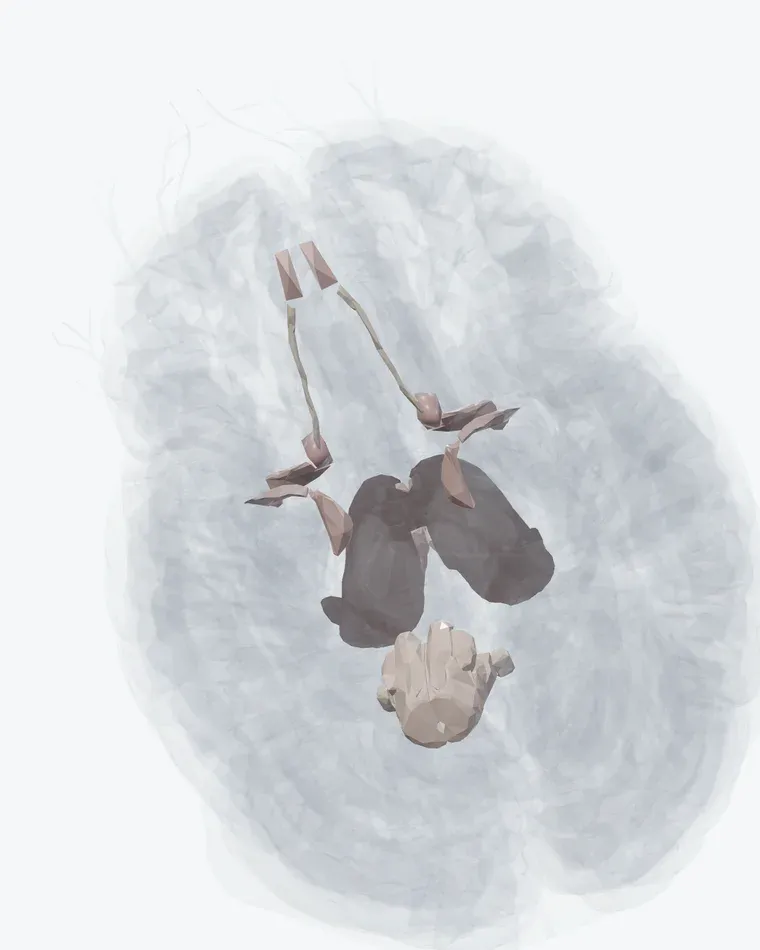
The parts involved
Choose a part to light it up.
- Olfactory bulb and tractReceives the signals of smell from your nose and passes them along the olfactory tract to the olfactory cortex and the limbic system. More about the olfactory bulb and tract
- Medulla oblongataReceives taste signals from your tongue in its solitary nucleus, which passes them on to your thalamus. More about the medulla oblongata
- ThalamusPasses taste signals on to the gustatory cortex, as it does for every sense but smell. More about the thalamus
Where is smell processed in the brain?
Smell starts in a small patch of lining high in your nose, where olfactory receptor cells pick up molecules from the air you breathe. The fibres of these cells form your olfactory nerves, which pass up through the roof of your nose. They end in your olfactory bulb, an oval mass under the front of your brain. From the bulb, a band of nerve fibres called the olfactory tract runs back along the underside of your frontal lobe.
The tract carries the signals to the primary olfactory cortex, at the base of your brain, in the lower, inner part of your temporal lobe. Most of the tract's fibres run on in its outer branch, the lateral stria. Most of these end in the uncus, the hooked front end of a ridge on the inner side of the temporal lobe.
Why can a smell bring back a memory?
Some fibres of the olfactory tract go to your limbic system, a group of brain parts that deals with emotion and memory, and to your hypothalamus. There, smells become linked with long-term memories and emotional responses. This is how a smell can bring back a memory full of feeling, such as the smell of a food from the place where you were born.
Smell reaches your limbic system directly, so it can stir up feelings in ways that the other senses can't. Two of the limbic system's most important parts are the hippocampus, which is essential for learning and memory, and the amygdala, which ties emotional meaning to your memories. Both are among the main parts of the brain involved with memory, and the amygdala has a part in how you feel emotions.
Where is taste processed in the brain?
Food molecules dissolve in your saliva and reach the taste buds on your tongue and in your mouth and throat. Nerves carry the signals from your taste buds to your brain: the facial nerve from the front of your tongue, and the glossopharyngeal nerve from the back. These nerves end in the solitary nucleus, a cluster of nerve cells in the medulla oblongata of your brainstem.
From there, the signals pass to the ventral posterior nucleus of your thalamus. The thalamus sends them on to the gustatory cortex, the area of the cerebral cortex where taste is processed and you become aware of it. The gustatory cortex lies tucked under the place where your frontal and temporal lobes overlap, very near the olfactory cortex. Taste signals also reach your limbic system.
The flavour of a food is its taste and its smell working together. So if you lose your sense of smell, food can seem bland, even though your sense of taste still works.
Does smell pass through the thalamus?
Smell doesn't pass through the thalamus. Every other sense passes through your thalamus, a relay deep in your brain, on its way to the cerebral cortex, where your awareness of what you sense begins. The thalamus processes the signals as it passes them on. The olfactory tract carries the signals of smell straight to the cerebral cortex, and to the limbic system and hypothalamus. This direct link with the cortex is one reason a smell can be such a strong trigger of memories and feelings.
OpenStax's Anatomy and Physiology (2013) says that in the earliest animals with a backbone, the cerebrum was not much more than olfactory bulbs. These bulbs took in information about the chemicals around those animals, which lived in the sea.
Every fact on this page is checked against the sources below. Last checked:
Sources
- Gray's Anatomy of the Human Body, 20th edition (1918)
- Anatomy and Physiology (OpenStax, 2013)
- Psychology (OpenStax, 2014)
- SEER Training Modules (National Cancer Institute)
- NCI Thesaurus (National Cancer Institute)
- Terminologia Anatomica, 2nd edition (FIPAT, 2019)
- olfactory bulb (TA2 5538)
- thalamus (TA2 5678)
- nucleus of solitary tract (TA2 6008), also called solitary nucleus
- olfactory tract (TA2 5539)
- lateral olfactory stria (TA2 5541)
- uncus (TA2 5516)
- Foundational Model of Anatomy (University of Washington)