
What part of the brain controls memory?
Your hippocampus, a curved ridge deep in each temporal lobe, is essential for learning and memory, and helps turn new memories into long-term ones. The other main parts of the brain involved with memory are the amygdala, the cerebellum and the prefrontal cortex.
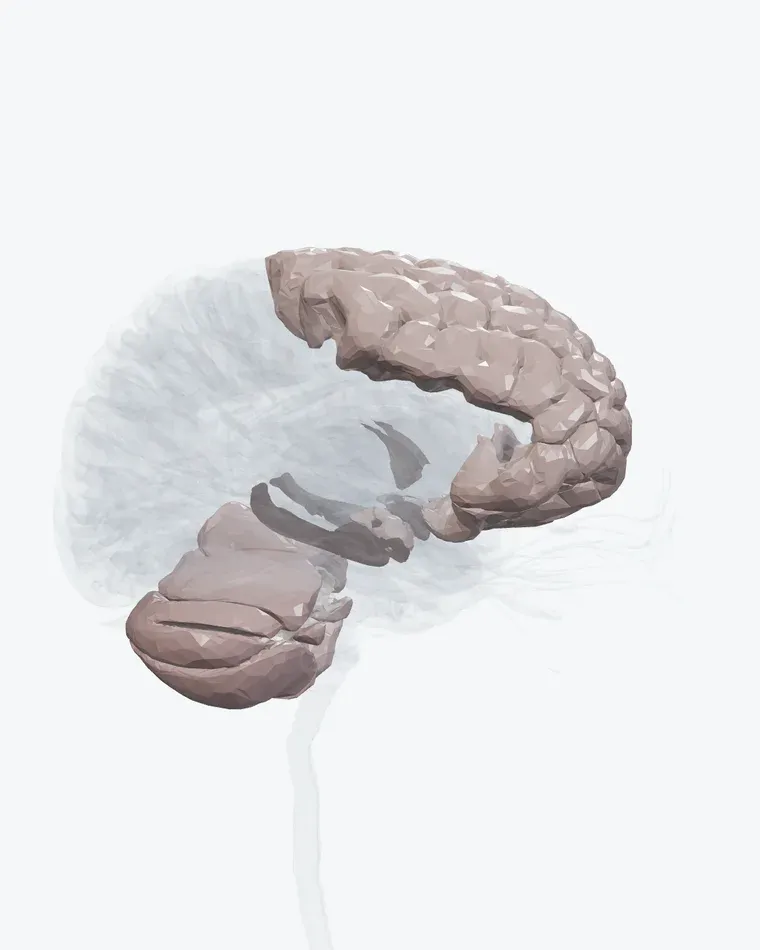
The parts involved
Choose a part to light it up.
- HippocampusHelps move new memories of facts and events into long-term memory, and sends information to areas of the cortex that give memories their meaning. More about the hippocampus
- AmygdalaTies emotional meaning to your memories, and seems to help lay a memory down more deeply when an event stirs strong feelings. More about the amygdala
- Prefrontal cortexHolds your short-term memory, also called working memory, which keeps information for a few seconds or minutes. More about the prefrontal cortex
- CerebellumSeems to help with procedural memory, the memory of how to do things, such as riding a bicycle. More about the cerebellum
What does the hippocampus do?
Memory is the process of storing information and then remembering it. Your hippocampus, a ridge about 5 cm long on the inner side of each temporal lobe, works with nearby parts of that lobe to move short-term memories into long-term memory. This step is called consolidation. The hippocampus seems to work mostly on explicit memories, the ones you consciously try to remember, such as what you study for an exam. Another job of the hippocampus is to send information to the cerebral cortex, the outer layer of the brain. Areas there give memories their meaning and link them with related memories.
In 1953, Henry Molaison had surgery to control his seizures. The surgery removed his hippocampus and his amygdala, a nearby group of nerve cell clusters, on both sides of his brain. Known for years as patient H.M., he could no longer form many kinds of new memories. He could not learn who was president of the United States or remember new faces. He would read the same magazine again and again, as if it were new to him.
Is memory kept in one place?
The researcher Karl Lashley damaged parts of the cerebral cortex in rats that had learned a maze. He was trying to erase their memory of it. The rats still found their way, whatever the size or place of the damage. Psychology (OpenStax, 2014) gives two views. In one, the whole brain is involved with memory. In the other, memory is kept in particular parts of the brain.
H.M.'s case suggests that different parts of the brain handle short-term memory, memories of events and the memory of how to do things. Memory is largely the work of the temporal lobe and of parts beneath the cortex, such as the hippocampus and the amygdala. Memories of events need the hippocampus to be stored for the long term, but the memories themselves end up in the cerebral cortex. A memory of a sound, such as a dog barking, is usually kept in the area of the cortex where that sound was processed.
Where is short-term memory?
Short-term memory holds information for a few seconds or minutes, and long-term memory holds it for longer. Short-term memory, also called working memory, is based in your prefrontal cortex, the front part of each frontal lobe. H.M. kept his short-term memory after the surgery, but what he held in it soon faded instead of being stored for the long term.
Brain scans suggest the prefrontal cortex also takes part in processing and keeping information. In one study, taking in new information went with activity in the left frontal region, and recalling it with activity in the right.
Where is muscle memory in the brain?
The memory of how to do things, such as brushing your teeth or riding a bicycle, is called procedural memory. Anatomy and Physiology (OpenStax, 2013) says procedural memory is motor memory. Procedural memory is thought to be linked with your cerebellum, at the back of your brain.
H.M. could still learn new skills, though he had no memory of learning them. Given the same puzzle several days in a row, he solved it faster each day without remembering that he had seen it before. Psychology (OpenStax, 2014) says this was likely because his cerebellum was left intact.
Why do emotional moments stay with you?
Your amygdala, close to the hippocampus in each temporal lobe, ties emotional meaning to your memories. The amygdala's main job is to regulate emotions such as fear and aggression. Stress hormones affect how memories are stored, so the amygdala has a part in storing them. The amygdala seems to help lay a memory down more deeply when the event behind it stirs strong feelings.
Strong emotions are thought to form strong memories, and weaker emotional experiences weaker ones. Under stress, your brain releases more of a chemical messenger called glutamate, and this helps you remember the stressful event. Flashbulb memories, unusually clear memories of important events, show this. Even these memories can become less accurate over time.
Every fact on this page is checked against the sources below. Last checked:
Sources
- Gray's Anatomy of the Human Body, 20th edition (1918)
- Anatomy and Physiology (OpenStax, 2013)
- Psychology (OpenStax, 2014)
- SEER Training Modules (National Cancer Institute)
- MedlinePlus (National Library of Medicine)
- NCI Thesaurus (National Cancer Institute)
- Foundational Model of Anatomy (University of Washington)