
What part of the brain controls breathing and heart rate?
Your medulla oblongata, the lowest part of your brainstem, controls your heart rate, blood pressure and breathing without your having to think about them. The medulla and your pons, just above it, together set how fast and how deeply you breathe. The medulla also holds the centre that controls swallowing.
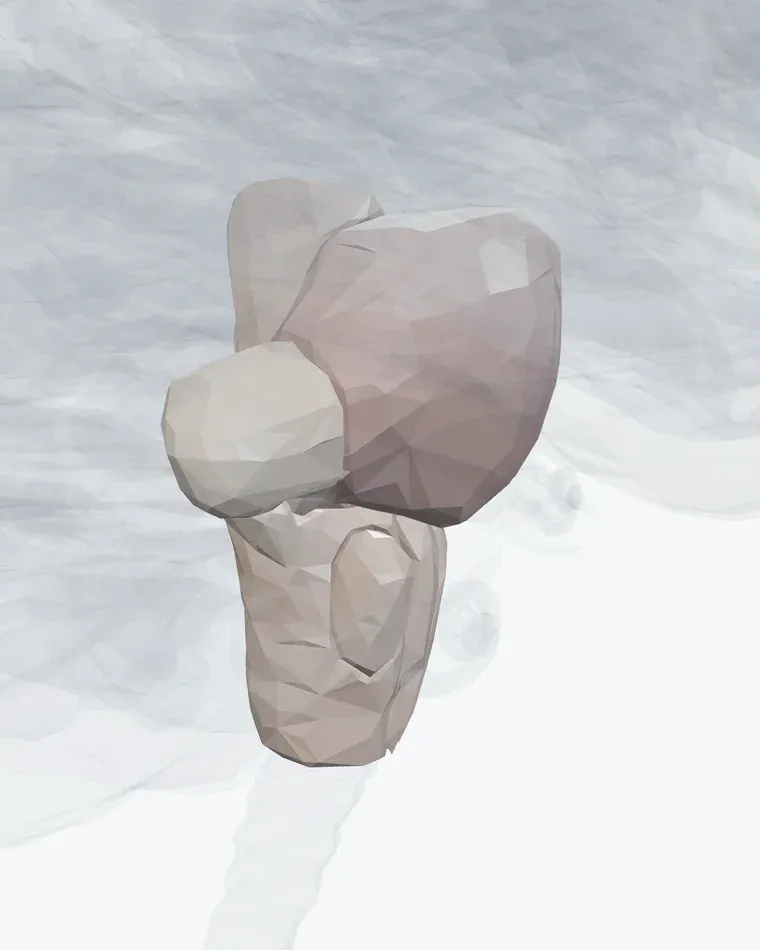
The parts involved
Choose a part to light it up.
- Medulla oblongataHolds the centres that control your heart rate and blood pressure, the centre that sets the basic rhythm of your breathing, and the swallowing centre. More about the medulla oblongata
- PonsHolds a second breathing centre, which adjusts the medulla's work and so sets how deeply and how fast you breathe. More about the pons
How does your brain control your breathing?
Breathing moves air into and out of your lungs, which are major organs of your respiratory system. The breathing centre in your medulla oblongata sets the basic rhythm. One group of its nerve cells makes your diaphragm and the intercostal muscles between your ribs contract, so you breathe in. When these cells stop signalling, your breathing muscles relax and you breathe out. Another group works the extra muscles you use to breathe in or out hard.
Your pons holds a second breathing centre, the pontine respiratory group, which adjusts what the medulla does. One part of this centre controls how deeply you breathe in. Another lets your muscles relax after each breath in, and so sets how fast you breathe.
What drives these centres most is the carbon dioxide in your blood, not the oxygen. Chemical sensors in your brain and brainstem, and in the carotid arteries of your neck and the arch of your aorta, signal the centres when the amount of carbon dioxide changes. As carbon dioxide rises, you breathe faster and more deeply.
Breathing usually happens without thought, but you can take control of it, as when you sing or swim under water. Breathing on purpose is controlled by areas of your cerebral cortex, the outer layer of your brain. Your hypothalamus and other parts of your limbic system, which deals with emotion and memory, change your breathing with your feelings, pain and temperature. You breathe faster when you are excited or when your body temperature rises.
How does your brain speed up or slow down your heart?
Your heart makes its own electrical signal for each beat, in a small cluster of cells called the sinoatrial node. Left to itself, this node would set a rate of about 100 beats a minute. Two paired cardiovascular centres in your medulla, which control your heart and blood vessels, change that rate through nerves. One part of these centres speeds your heart up, and another slows it down through the vagus nerve. At rest the slowing signals win, so your heart beats about 70 times a minute.
When you exercise, sensors in your muscles, joints and tendons fire faster, and the centres speed up your heart to send more blood. Signals from your hypothalamus can also make the centres raise your heart's activity, as when you are anxious or stressed.
The same centres control your blood pressure. Pressure sensors in your aorta and carotid arteries report the pressure to the centres. When the pressure changes, the centres start a reflex that brings it back.
These centres aren't in any lobe of your brain. The lobes are parts of your cerebrum, while the medulla and pons belong to your brainstem, a separate part of the brain.
Which part of the brain controls swallowing?
You choose when to swallow, and your tongue pushes the food to the back of your mouth. After that, the swallow runs on its own, controlled by the swallowing centre, a group of nerve cells in your medulla. This centre raises your soft palate to close off the top of your throat, behind your nose. It also tightens the muscles of your voice box, so that food doesn't go into your windpipe. Your breathing stops for a moment, and the muscles of your throat squeeze the food down. The medulla also controls the waves of muscle contraction that carry the food down your oesophagus, or gullet, to your stomach.
What is central sleep apnoea?
Central sleep apnoea is a disorder in which breathing stops for short spells during sleep. The breathing centres of the brain don't respond properly to rising carbon dioxide, so they don't make your breathing muscles contract regularly. A stroke or congestive heart failure may cause central sleep apnoea by damaging the pons or the medulla. Central sleep apnoea differs from obstructive sleep apnoea, in which the airway is blocked during sleep.
Your pons also has a part in how your brain controls sleep. It helps regulate your brain's activity while you sleep.
Every fact on this page is checked against the sources below. Last checked:
Sources
- Gray's Anatomy of the Human Body, 20th edition (1918)
- Anatomy and Physiology (OpenStax, 2013)
- Psychology (OpenStax, 2014)
- SEER Training Modules (National Cancer Institute)
- MedlinePlus (National Library of Medicine)
- NCI Thesaurus (National Cancer Institute)
- Terminologia Anatomica, 2nd edition (FIPAT, 2019)
- medulla oblongata (TA2 5983)
- pons (TA2 5921)
- brainstem (TA2 5856)