
What part of the brain controls sleep and consciousness?
Your hypothalamus, thalamus and pons are among the brain areas that seem to work together to control your cycle of sleep and waking. The reticular formation in your brainstem helps set how awake and alert you are. Your pineal gland makes melatonin, a hormone that makes you drowsy as its level rises in the evening.
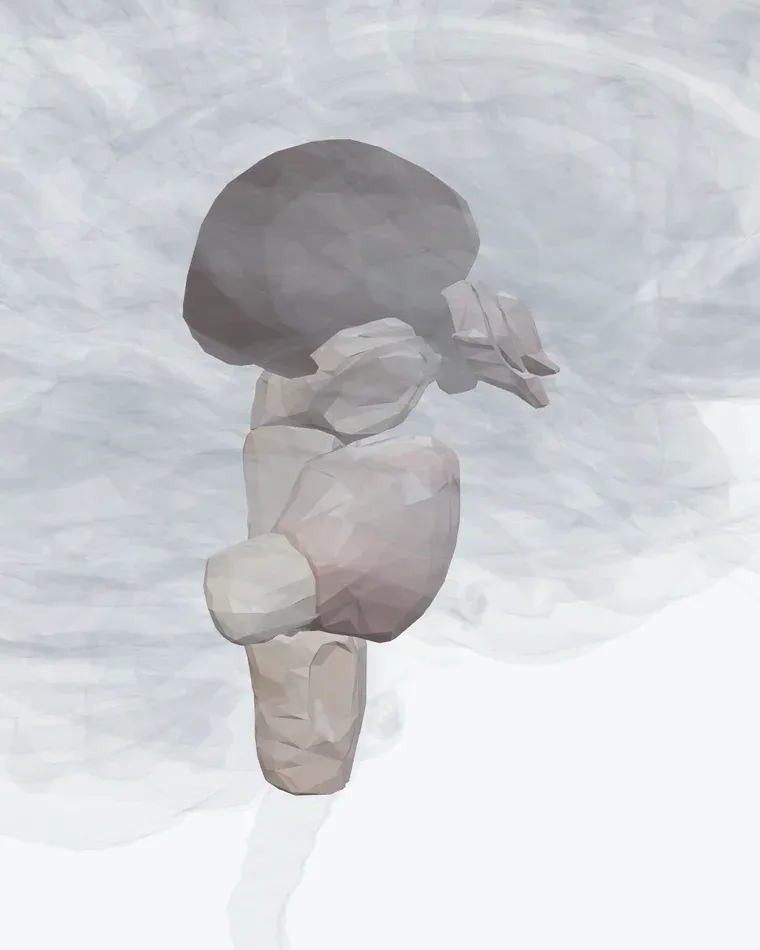
The parts involved
Choose a part to light it up.
- HypothalamusKeeps your daily rhythms in step with daylight through its body clock, the suprachiasmatic nucleus. Works with the thalamus to regulate deep sleep. More about the hypothalamus
- ThalamusWorks with the hypothalamus to regulate deep sleep. Some of its clusters of nerve cells help set how alert you are. More about the thalamus
- PonsHelps regulate REM sleep, the phase of sleep in which you dream, and the activity of your brain while you sleep. More about the pons
- Reticular formationHelps regulate when you sleep and wake, and how awake and alert you are. More about the reticular formation
- Pineal glandMakes the hormone melatonin, which makes you drowsy as its level rises in the evening. Light reaching your eyes lowers the amount the gland makes. More about the pineal gland
What makes you sleepy at night?
Your body runs on daily cycles called circadian rhythms, each about 24 hours long. Your cycle of sleep and waking is one of them, and it is linked to the natural cycle of light and dark.
The clock that keeps these rhythms is the suprachiasmatic nucleus, an area of your hypothalamus. Light-sensitive nerve cells in your retina tell the clock how much light there is, so it keeps in step with the day outside. From the clock, signals travel down to your spinal cord and on to your pineal gland. In daylight, the gland makes less of the hormone melatonin, and this helps keep you awake. As the light fades in the evening, the gland makes more, and you grow drowsy.
Your body temperature rises and falls over each day as well. You tend to feel more alert when it is higher, and sleepier when it is lower.
Your daily rhythm works together with a second control, which keeps your sleep in balance. After too little sleep, you tend to fall asleep faster the next time you can.
What keeps you awake and alert?
The reticular formation is a network of nerve cells and fibres that runs through your brainstem. It helps regulate your cycle of sleep and waking, and how awake and alert you are. It is also linked with the general activity of your brain and with your attention.
Your thalamus has a part too. Some of its nuclei, clusters of nerve cells, help set how alert you are.
Which part of the brain is responsible for consciousness?
Consciousness is your awareness of what happens inside and outside your body, such as pain, hunger, the light of the sun or the voice of a friend. It runs from full awareness down to deep sleep, with states such as daydreaming in between.
Many of the brain's higher functions, such as memory, emotion and consciousness, are the result of the work of your cerebrum, the largest part of your brain. Its outer layer, the cerebral cortex, is linked with consciousness and with thought, language and memory. Your awareness of what you sense begins in the cortex, which the signals of most senses reach through your thalamus.
What happens in your brain during deep sleep?
Sleep has two main phases, rapid eye movement (REM) sleep and non-REM sleep, and non-REM sleep has four stages. Stages 3 and 4 are deep sleep, also called slow-wave sleep, because your brain waves become slow and large. Your heart rate and breathing slow down a great deal, and you are much harder to wake. Nuclei of your hypothalamus work with your thalamus to regulate this deep sleep. Slow-wave sleep after you learn a new task can make you better at the task, and this kind of sleep seems to be essential for forming memories.
In REM sleep, your eyes dart about under closed lids, and your brain waves look much like those of someone awake. This is when you dream. Your muscles are paralysed, except for those that keep your blood flowing and keep you breathing. Your pons is important for regulating REM sleep.
What is central sleep apnoea?
In sleep apnoea, your breathing stops for spells during sleep. In central sleep apnoea, the breathing centres in your pons and medulla oblongata don't respond properly to rising carbon dioxide, so they don't signal your breathing muscles regularly. A stroke or congestive heart failure may cause central sleep apnoea by damaging the pons or the medulla. In obstructive sleep apnoea, the airway is blocked during sleep instead.
Every fact on this page is checked against the sources below. Last checked:
Sources
- Gray's Anatomy of the Human Body, 20th edition (1918)
- Anatomy and Physiology (OpenStax, 2013)
- Psychology (OpenStax, 2014)
- SEER Training Modules (National Cancer Institute)
- NCI Thesaurus (National Cancer Institute)
- Terminologia Anatomica, 2nd edition (FIPAT, 2019)
- hypothalamus (TA2 5714)
- reticular formation (TA2 5367)
- suprachiasmatic nucleus (TA2 5720)
- pons (TA2 5921)