
What part of the brain controls hunger, thirst and body temperature?
Your hypothalamus, a small region deep in your brain below the thalamus, helps control your hunger, thirst and body temperature. Like a thermostat, it makes you sweat when you are too hot and shiver when you are too cold. It also controls many of your hormones through your pituitary gland, which hangs beneath it.
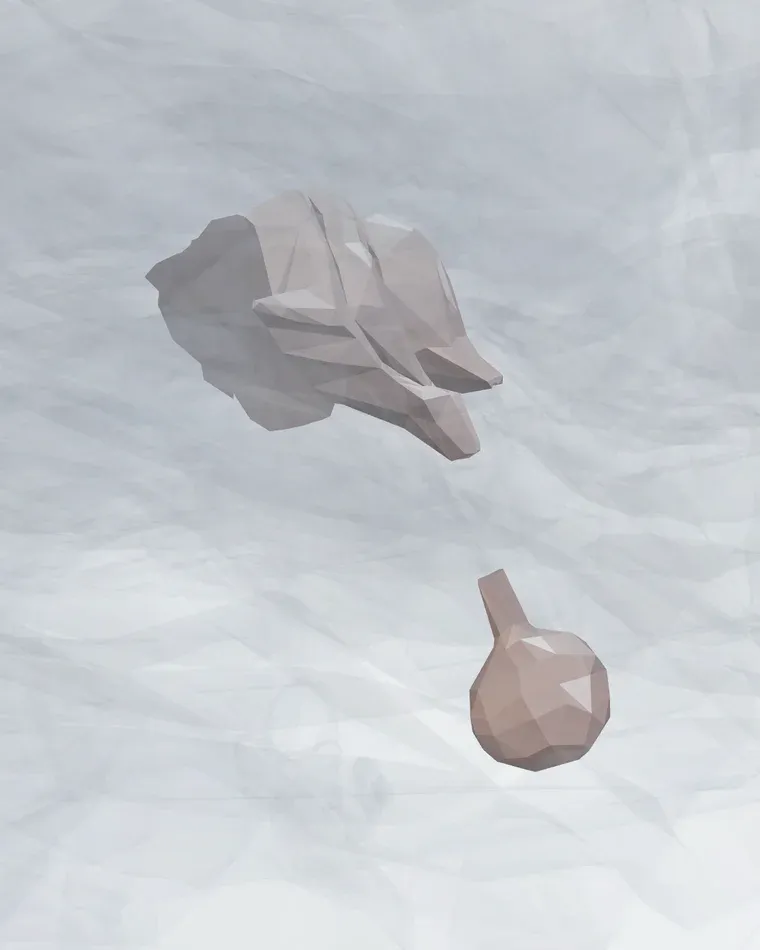
The parts involved
Choose a part to light it up.
- HypothalamusHelps control your hunger, makes you thirsty when your blood is too concentrated, and keeps your body temperature steady. More about the hypothalamus
- Pituitary glandReleases antidiuretic hormone from its back lobe when you are short of water. The hormone is made in your hypothalamus and has your kidneys take back water. More about the pituitary gland
How does your brain make you hungry?
Several signals from your body make you feel hungry. When your stomach is empty, it contracts, and you may feel hunger pangs. When the sugar in your blood falls, your pancreas and liver send out chemical signals that bring on hunger. Your stomach also releases a hormone called ghrelin, whose level rises just before meals. Ghrelin acts on your hypothalamus.
Once you have eaten, other signals tell your brain that you are full. As the sugar in your blood rises, your pancreas and liver send signals that switch hunger off. Food passing through your gut sends signals to your brain too. Your fat cells release leptin, a hormone that makes you feel full after a meal.
Your brain brings all these signals together, and activity in your brain decides whether you eat. Several areas of your hypothalamus and of your hindbrain, at the back of your head, seem to be especially important places for this.
Prader-Willi syndrome is a genetic disorder that causes a constant, strong feeling of hunger. How it works isn't fully understood, but there is evidence that people with it have an abnormal hypothalamus.
How does your brain make you thirsty?
When you lose water as sweat, urine or breath, your blood becomes more concentrated. A thirst centre in your hypothalamus has sensors, called osmoreceptors, that check how concentrated your blood is. When your blood becomes too concentrated, the hypothalamus makes you aware that you are thirsty, and you drink.
The hypothalamus also releases antidiuretic hormone (ADH) through the back lobe of your pituitary gland. ADH has your kidneys take water back from your urine. To save water, the hypothalamus signals your salivary glands as well, so they make less watery saliva and more thick mucus. Your mouth feels dry, and this adds to your thirst.
A fall in your blood pressure can make you thirsty too. Your kidneys then start a chain of steps that makes a hormone, angiotensin II, and this hormone stimulates the thirst centre.
How does your brain keep your temperature steady?
Your body keeps its core temperature at around 36.5 to 37.5 °C, even when the air around you is much hotter or colder. Your hypothalamus works like a thermostat. When you are too hot, it sends more blood to the surface of your body, so that heat can escape through your skin. It also makes you sweat, and your skin cools as the sweat evaporates.
When you are too cold, the hypothalamus makes you shiver, and the work of your muscles makes heat. In the cold, your brain also reduces the blood flowing to your skin, which keeps heat in the core of your body. Thyroid hormone, from your thyroid gland, makes the cells all over your body use more energy and make more heat.
This kind of control is called negative feedback. Each response reverses the change and brings your temperature back towards its normal value, about 37 °C. A rise in your body temperature also makes you breathe faster, through the hypothalamus's links with your brain's breathing centres.
What else does the hypothalamus control?
The hypothalamus is in charge of your autonomic nervous system, the part of your nervous system that works without your conscious control. When you are scared, signals from your amygdala reach the hypothalamus, which starts your fight-or-flight response.
The hypothalamus controls the front lobe of your pituitary gland with hormones of its own, and the back lobe through nerve fibres that run down the gland's stalk.
Your body clock, the suprachiasmatic nucleus, is in your hypothalamus too. The clock keeps your daily rhythms in step with daylight, and the hypothalamus is one of the brain areas that seem to control your cycle of sleep and waking.
Your hypothalamus is one of the two main parts of your diencephalon, which lies deep beneath your cerebrum. The other is your thalamus, above the hypothalamus.
Every fact on this page is checked against the sources below. Last checked:
Sources
- Gray's Anatomy of the Human Body, 20th edition (1918)
- Anatomy and Physiology (OpenStax, 2013)
- Psychology (OpenStax, 2014)
- SEER Training Modules (National Cancer Institute)
- Terminologia Anatomica, 2nd edition (FIPAT, 2019)
- hypothalamus (TA2 5714)
- pituitary gland (TA2 3854)
- pars nervosa of hypophysis (TA2 3861), also called posterior lobe of pituitary gland
- suprachiasmatic nucleus (TA2 5720)